Three Eras. One Line.
From Medina's scholarly circles → Salamiyya's underground cells → Cairo's imperial courts → Gujarat's community halls.
Twenty-one figures. Five centuries. Three eras of authority — visible, concealed, imperial. One lineage that cracks open Islam's deepest arguments about who gets to speak for God.
Among Alavi Bohras — a Tayyibi Mustaʿli Ismaʿili community — "the Imams" means a specific chain of twenty-one figures. It starts with Hasan ibn Ali (counted as Imam #1 after Ali's martyrdom) and ends with al-Tayyib, who entered concealment (satr) after a succession crisis in 1130 CE. Since then: no visible Imam. Authority flows through deputies.
Here's the thing — the same historical people show up across Sunni, Twelver Shia, and Ismaʿili traditions. They're real. What changes is what "Imam" means, who qualifies, and whether the designation can survive death, concealment, and political violence. This isn't a list of names. It's a map of how one bloodline fractures into incompatible theologies of authority.
Every person on this list is historically real. What changes is what "Imam" means.
These figures are revered as Ahl al-Bayt — the Prophet's family. But "Imam" doesn't function as a hereditary office of divine guidance. Leadership theory developed around the caliphate. Ashura? Fasting, linked to Moses. Not primarily Husayn's martyrdom.
Twelvers recognise twelve Imams total (counting Ali as #1). They agree with Ismaʿilis through Jaʿfar al-Sadiq, then follow his other son Musa al-Kazim. Same early figures, fundamentally different succession after 765 CE.
The Imamate passes by naṣṣ — explicit divine designation. Once Jaʿfar designated Ismaʿil, it cannot be undone, even if Ismaʿil died first. This single principle drives everything: the concealment era, the Fatimid caliphate, and every later schism.
From Medina's scholarly circles → Salamiyya's underground cells → Cairo's imperial courts → Gujarat's community halls.
Scroll horizontally. ● Early Ahl al-Bayt · ● Concealment · ● Fatimid Caliphs · ● Schism era
Jaʿfar al-Sadiq dies. His students taught the founders of two major Sunni schools of law. His death produces rival succession claims — and Islam's two largest Shia traditions permanently diverge.
After Jaʿfar, the Ismaʿili Imams vanish from public view. For 150 years, the Imam's identity is a state secret.
Why this matters: The concealment era created the historiographical nightmare that persists today. Fatimid-era insistence on secrecy and the use of assumed names generated later confusion and competing reconstructions. The scholar Sami Makarem foregrounds the problem of concealed names — we're reconstructing identities that were designed to be unrecoverable.
Al-Mustansir dies after the longest Fatimid reign. Two sons claim the Imamate. The vizier installs al-Mustaʿli; Nizaris insist Nizar had the genuine naṣṣ. Today's Aga Khan traces lineage through the Nizari side.
Naṣṣ — explicit divine designation — is the thread holding this lineage together. Every schism is ultimately an argument about who was genuinely designated.
Al-Amir is assassinated. His infant son al-Tayyib vanishes in the power struggle. Two communities form around opposing answers — and the Bohra identity is born.
These aren't academic footnotes. Each one generates a different theory of authority depending on which side you accept. Click to expand.
Same person, different number, sometimes "not an Imam at all." The overlap and divergence at a glance.
| Person | Tayyibi # | Twelver # | Sunni View | Nizari? | The Split |
|---|---|---|---|---|---|
| Ali ibn Abi Talib | Wasi (not Imam) | #1 | 4th Caliph | Wasi | — |
| Hasan ibn Ali | #1 | #2 | Ahl al-Bayt | #1 | All shared |
| Husayn ibn Ali | #2 | #3 | Ahl al-Bayt | #2 | All shared |
| Ali Zayn al-Abidin | #3 | #4 | Pious scholar | #3 | All shared |
| Muhammad al-Baqir | #4 | #5 | Hadith source | #4 | All shared |
| Jaʿfar al-Sadiq | #5 | #6 | Teacher of schools | #5 | Last shared Imam |
| Ismaʿil ibn Jaʿfar | #6 | ❌ | — | #6 | ⚡ Twelver–Ismaʿili |
| Muhammad ibn Ismaʿil | #7 | ❌ | — | #7 | Ismaʿili only |
| Concealed Imams (8–10) | #8–10 | ❌ | — | #8–10 | Identities debated |
| Fatimid Caliphs (11–18) | #11–18 | ❌ | Rival caliphs | #11–18 | Shared until 1094 |
| al-Mustaʿli | #19 | ❌ | — | ❌ | ⚡ Nizari–Mustaʿli |
| al-Amir | #20 | ❌ | — | ❌ | Mustaʿli only |
| al-Tayyib | #21 | ❌ | — | ❌ | ⚡ Tayyibi–Hafizi |
Doctrine becomes lived practice through commemoration. Same calendar date, same burial site, same name — all read differently.
10 Muharram. Sunnis fast, recalling Moses and divine deliverance. Shia Muslims mourn Husayn's martyrdom at Karbala — sermons, lamentation, processions. One calendar date, two entirely different meanings encoded into it for 1,300+ years.
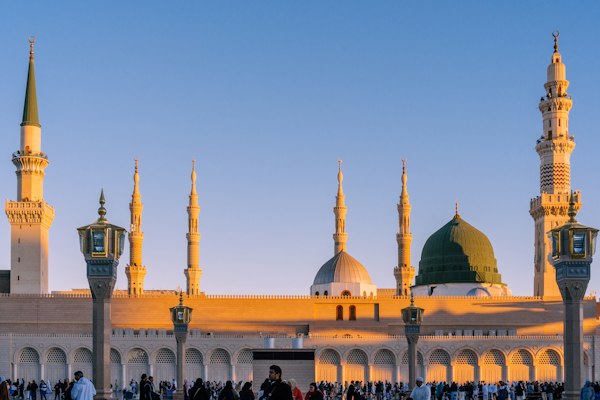
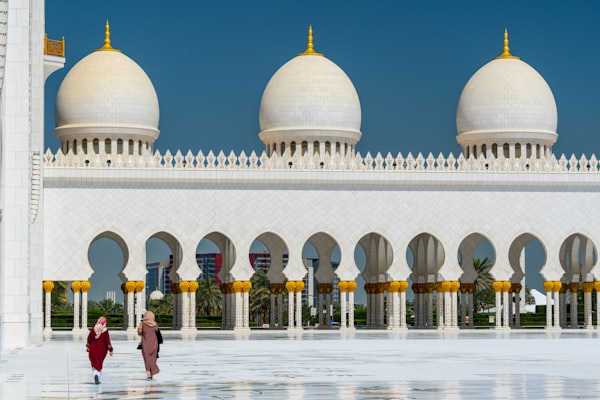
The burial complex in Medina holds several early Imams (Hasan, Zayn al-Abidin, al-Baqir, al-Sadiq). A major Shia pilgrimage site. Tomb structures were demolished in 1925. The physical destruction of monuments only amplified their symbolic power.
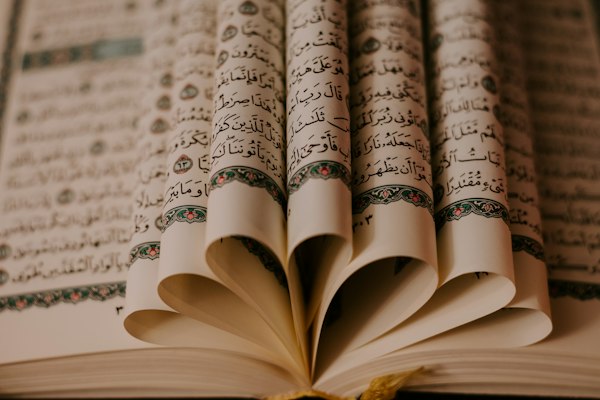
In Alavi Bohra community calendars, each Fatimid Imam is linked to ʿurs (death anniversary) entries with specific dates and locations — Mahdiya, Cairo, specific mosques. A living calendar that keeps 1,000-year-old memory present in daily community life, from Gujarat to global diaspora.
Early Ismaʿili history was shaped by deliberate secrecy and later hostile polemic. Almost every source carries a perspective. Source criticism isn't optional.
The foundational early Islamic chronicle. Cited in IIS Salamiyya discussion for pre-Fatimid events.
Key source on concealment-era identities. Title literally means "The Concealment of the Imam."
Fatimid-era legal code commissioned under al-Muʿizz. Still used in Bohra jurisprudence today.
Post-Fatimid Ismaʿili historian. Key source for later reconstruction of the Imam chain.
Egyptian compiler. Much of the Fatimid narrative we have is mediated through his later compilations.
Cambridge/IIS. Showed how Ismaʿili history was filtered through hostile heresiography for centuries. Essential corrective.
Major on early succession debates. Named in IIS Salamiyya scholarship.
Key work on the succession crisis after al-Amir and the rise of Tayyibism.
London. Major reference hub for Salamiyya, the Imamate, and Fatimid studies.
A note on reading this material: Fatimid-era secrecy, the deliberate use of code-names, and centuries of hostile heresiography mean almost every source carries a perspective. Polemical distortion and archival loss aren't bugs in the scholarship — they're the nature of the material. The scholar Sami Makarem (AUB) has shown how even the names of the concealed Imams were designed to confuse later reconstruction.